
Wallet
Disclaimer
Depending on the country, receiving advertising fees from advertisers may be subject to value-added tax (VAT) or other taxes. This aspect needs to be verified and handled by the retail platform. Moloco does not interfere with any tax-related processes required for using the Wallet function.
Introduction
The Wallet function in Moloco Commerce Media provides features for prepaid advertising, credits management, and advertising expenditure visibility for each advertising account (Ad account). This enables retail platforms to support prepaid advertising workflows.
The Wallet also allows the platform to provide credits for advertising expenses based on promotions, events, or discretionary support programs.
Concepts
Below are the key concepts and terms necessary to use the Wallet function:
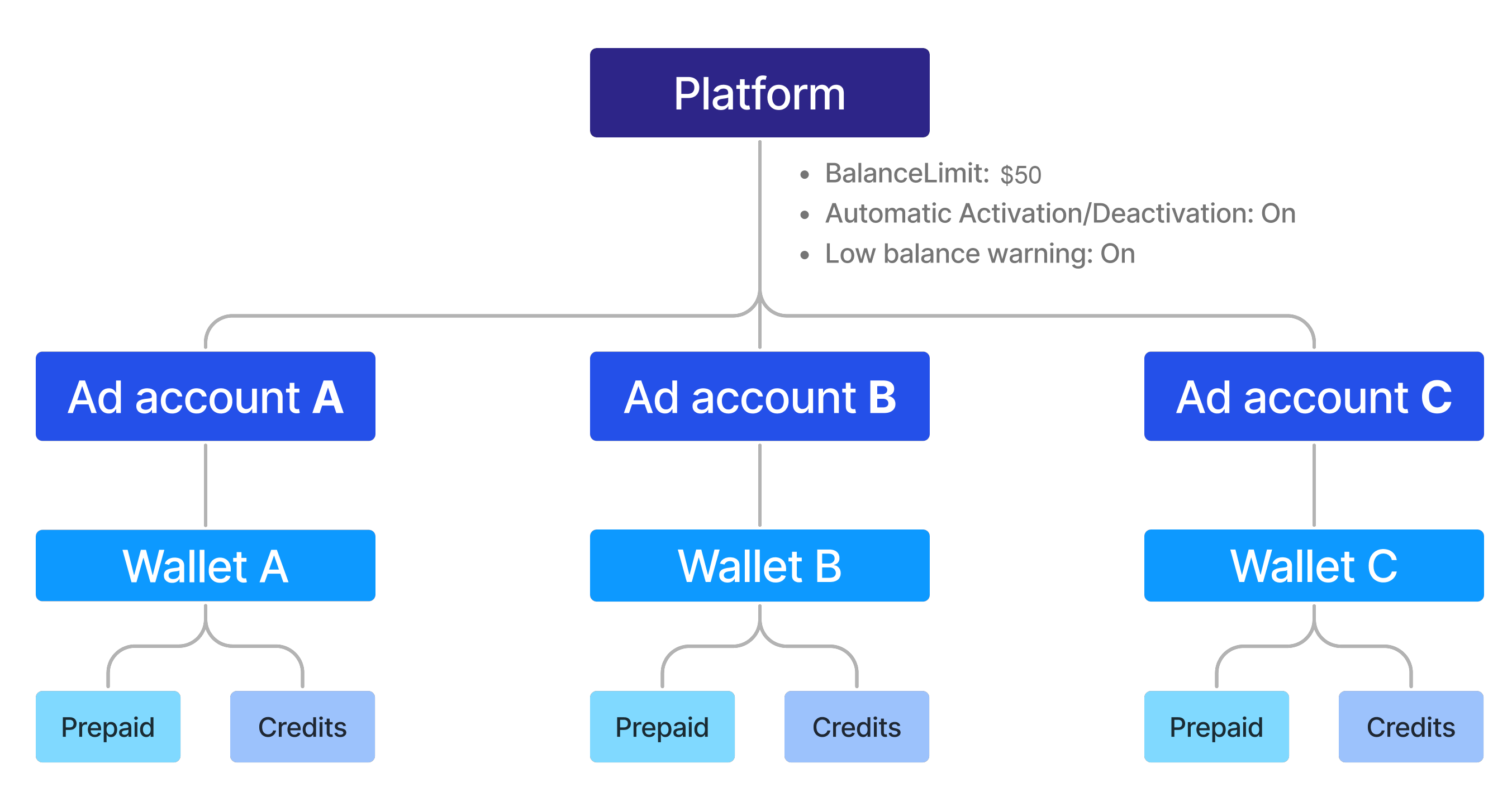
Platform
The platform represents your marketplace using Moloco Commerce Media Sponsored Ads. Moloco provides a Platform ID during onboarding, and this ID is required when making API requests to Moloco Commerce Media APIs.
Ad Account
An Ad account is an entity linked to a seller or merchant identity. Advertisers can set up one or more campaigns within an Ad account. For more information on ad accounts, please see: Solution components.
Wallet
A Wallet is a virtual account used to manage advertising funds on Moloco Commerce Media. Each Ad account is automatically assigned one Wallet. A Wallet includes two fund types that are managed separately according to their purpose:
- Prepaid: customer-funded advertising budget, excluding any taxes handled by the retail platform.
- Credits: marketplace-issued funds for promotions, advertiser incentives, business support, or discretionary compensation.
Credits and Prepaid Accounts
When deducting advertising expenses, the Wallet can use both Credits and Prepaid funds.
The current billing model also prevents funds added on the following day from retroactively applying to the previous day’s spend. For example, if credits are topped up shortly after midnight on Oct 1, those credits apply only to Oct 1 and later, rather than to Sep 30 spend.
Balance Limits
Platforms may enable or disable a low Balance Limit. When the Balance Limit option is used, an Ad account can be automatically deactivated if its remaining Wallet balance falls below the configured threshold. In practice, this means campaigns under that Ad account stop serving until the account is reactivated according to the platform’s policy.
The current billing model does not change the purpose of Balance Limits. It changes how end-of-day balances are reconciled so that the ending balance for a day reflects the actual end of that day.
Low Balance Thresholds
Platforms may optionally set a low balance threshold for notifications. Unlike Balance Limits, a low balance threshold does not deactivate the Ad account. Instead, it warns users that the Wallet balance is low so they can add funds before campaign serving is interrupted.
Automatic Reactivation
If an Ad account is deactivated because of insufficient balance, the account can be reactivated automatically once its Wallet balance rises above the configured threshold, depending on platform settings. Automatic Reactivation is enabled by default, but platforms may disable this feature when required.
Negative Balances
This option determines whether negative balances are shown in wallet-related user interfaces. Negative balances are enabled by default, but platforms may disable this feature when required.
NoteThe Wallet History UI doesn’t show the balance at the time of each transaction. You should rely on daily beginning and ending balances in the financial summary data export, or download the CSV for transaction-level balance details.
Notifications
An email notification system is available for customers using the Stand Alone or Widgetized Campaign Managers. Notifications can be turned on or off at the platform level.
Note:
- Notifications are not available when using Moloco’s Management API to build custom campaign managers. If you are planning to build your own campaign management system please see the Build your own Campaign Manager page for further information.
- Platform-level notification behavior is still determined by your campaign manager configuration and platform policies.
Define Your Policies
Because of the Wallet’s operational behavior, several policy decisions are required before using the Wallet function:
- Set or disable the Balance Limit threshold amount.
- Decide whether to use low-balance warning notifications when the Wallet balance falls below the low balance threshold.
- Determine whether Ad account reactivation should be automatic or manual.
- Determine whether negative balances should be shown in supported user interfaces.
Once these decisions are made, please share the details with your Moloco representatives.
CautionIf you use the API for billing automation you need to migrate to the new v2 endpoint. See the details for Wallet History.
Campaign Manager Wallet
Moloco Commerce Media (MCM) provides a user interface for managing virtual wallet functions within the Stand Alone Campaign Manager. The Wallet UI is designed to provide clear budget management and transaction visibility for advertising accounts.
These features include:
- A simplified and user-friendly interface for adding or removing funds.
- Confirmation pop-ups to verify transaction details.
- Audit trails and transaction comments for tracking.
- Improved Wallet History visibility, including clearer transaction timing, pending status for ad spend, and downloadable CSV history.
Top-up and Withdrawal
The Wallet UI allows users to add funds through top-up and remove funds through withdrawal. This includes a transaction log and options to select the funding type, Prepaid or Credits.
Transaction History and Comments
The Wallet UI provides a detailed transaction history for operational tracking and audit purposes. Users managing wallets can view transaction activity and add comments to transactions for record-keeping.
The current billing model makes transaction history clearer and more aligned with actual spend behavior. Instead of relying only on the posted timestamp, the history distinguishes between:
- Transaction Date: the date when the spend actually occurred.
- Posted Date & Time: the time when the transaction was processed and recorded.
For ad spend, transactions may appear as pending until the day is finalized and fully processed. This gives users visibility into ongoing spend while preserving accurate final records.
NoteThe Wallet History UI doesn’t show the balance at the time of each transaction. You should rely on daily beginning and ending balances in the financial summary, or download the CSV for transaction-level balance details.
Wallet History
Wallet History is a useful surface for both day-to-day operations and finance review. In addition to transaction amounts, users can better understand when spend happened, when it was posted, and whether it is still pending final processing.
Wallet History can also be downloaded directly from the UI as CSV for up to 90 days at a time.
Viewing Transaction History
Figure 1 below shows the Wallet History table, including separate columns for total amount, Prepaid amount, Credits amount, and Posted time, as well as the Pending state for ad spend.
Wallet History
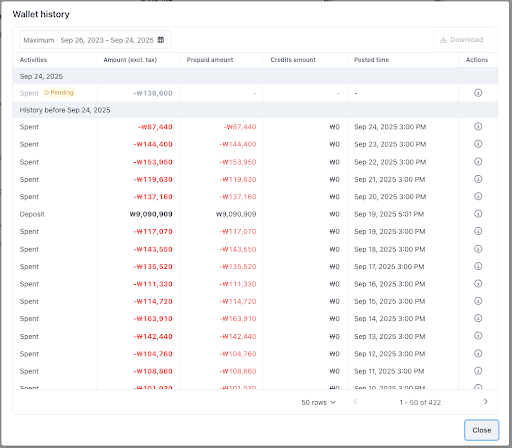
Figure 1: Wallet History table with Pending status and separate Prepaid and Credits amounts.
Figure 2 highlights Transaction Date and Posted Date & Time.
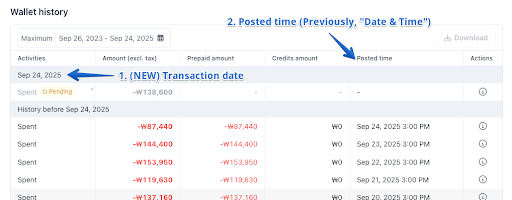
Figure 2: Wallet History UI highlighting Transaction Date, Posted Date & Time, and Pending status.
Figure 3 shows the detailed Pending transaction state that users may see before ad spend is fully posted.
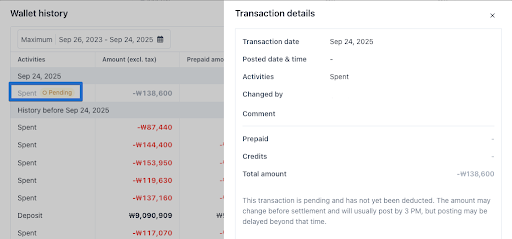
Figure 3: Pending ad spend transaction details before final posting.
Updated 4 months ago