
Sponsored Products
Overview
Sponsored Products is a native, cost per click (CPC) ad type that enables advertisers to promote individual items from their catalog directly within a marketplace's shopping experience. These ads appear in high-traffic areas such as search results, category pages, product detail pages, and the home page.
Unlike traditional display ads, Sponsored Products blend natively into the platform, appearing as boosted product cards that look nearly identical to organic listings.
Adjustable features
Advertisers can configure several parameters for Sponsored Product campaigns to align with their specific sales goals. Please contact your Moloco representative for more information on configuration options.
| Setting | Description |
|---|---|
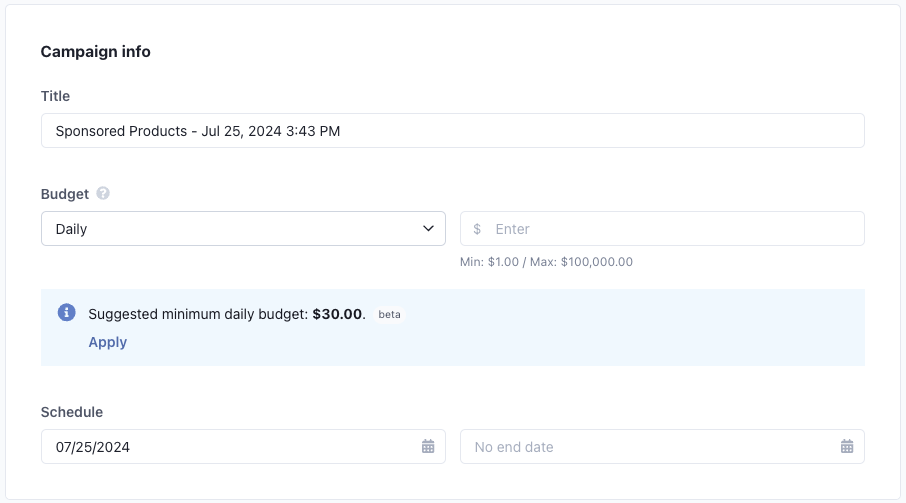
| Campaign Title | A descriptive name for internal campaign organization. |
| Budget Duration | Choose between Daily or Weekly spend caps. |
| Budget Amount | The maximum amount the advertiser is willing to spend for the selected duration. |
| Schedule | A mandatory start date, with an optional end date. |
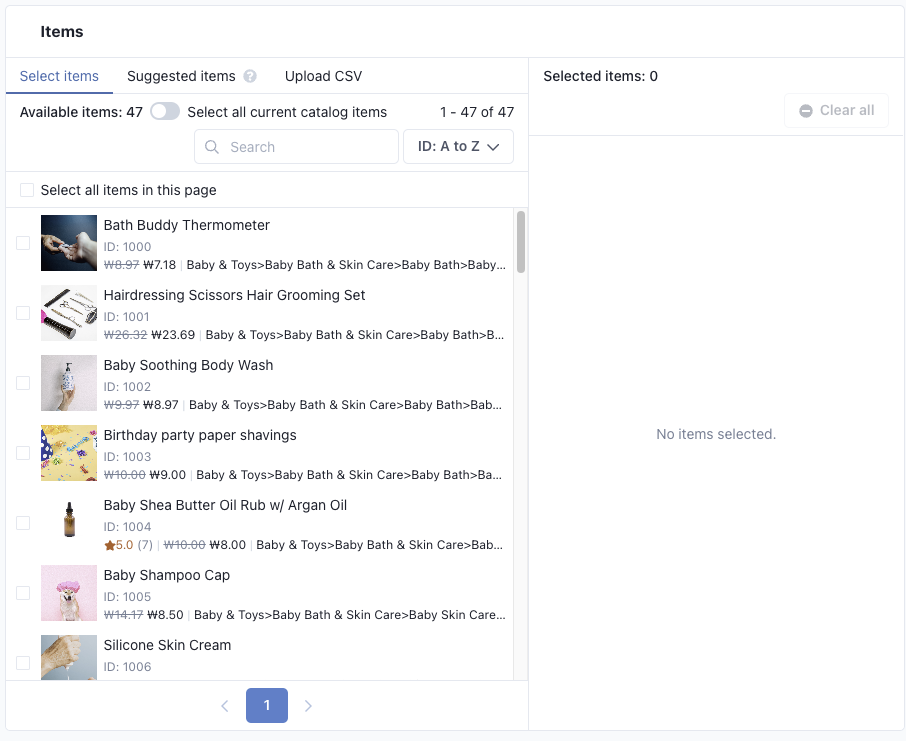
| Items | Advertisers can select up to 5,000 individual items to promote within a single campaign. |
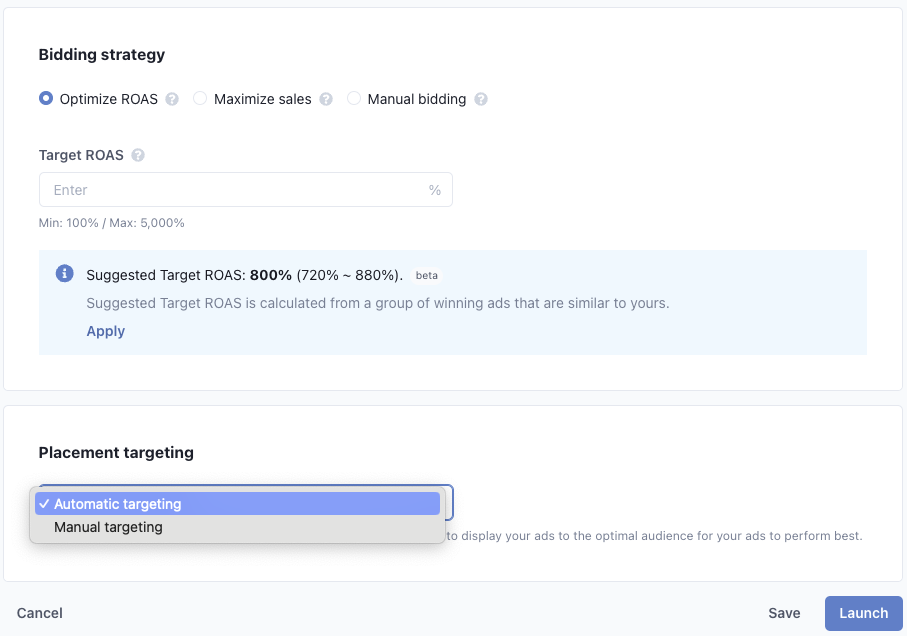
| Bidding Strategy | Choose between Optimize ROAS (Target ROAS), Max Sales, or Manual CPC. |
| Target ROAS | When the bidding strategy is set to ‘Optimize ROAS’, advertisers must set their preferred target ROAS. The system adjusts the bid price based on the target ROAS chosen. |
| Maximize Sales | A smart bidding strategy to get maximum sales within a budget. The underlying machine learning system will predict performance and optimize your bids in real time to deliver maximum sales. Supports Automatic and Manual Targeting |
| CPC | When the bidding strategy is set to ‘Manual bidding’, advertisers must provide the amount they are willing to pay for each click on the ad. |
| Audience Targeting | Options for Automatic/Smart targeting (MCM's ML determines the best audience based on behavioral signals. Recommended default) OR Manual targeting (focusing on new vs. existing customers). |
| Placement Targeting | Controls where ads appear, with Automatic optimization OR Manual selection of specific pages (e.g., Search, Home, Cart). |
Quotas and LimitsTo ensure platform stability and performance, MCM enforces specific limits on campaign configuration. For a full list of system constraints, including maximum keywords and item counts, see the MCM Quotas and Limits page.
Sponsored Products Bidding Strategies
A bidding strategy refers to the method advertisers use to determine how much they are willing to pay in real-time auctions. There are 3 bidding strategies for Sponsored Products Ads: Optimize for ROAS, Max Sales, and Manual bidding.
Note:Each campaign bidding strategy can be turned on or off at the platform level. It is not possible to adjust the bidding strategy for a set of individual advertisers or groups of advertisers.
Choosing a Bidding Strategy
If you are a new advertiser or have never advertised your products before, we suggest starting with a Manual bidding strategy first. Then run a Manual bidding campaign for at least 2 weeks before starting an Optimize ROAS or Max Sales bidding campaign.
Running a Smart bidding campaign enables advertisers to achieve stable sales and expand reach with a minimum ROAS goal. This option is simple to use as it does not require optimization tuning, advertisers can simply start the campaign and monitor progress.
1. Optimize ROAS (Target ROAS)
Optimize ROAS is an automated bidding strategy designed to streamline the bidding process, eliminating the need for guesswork. It utilizes your target ROAS (tROAS goal) to automatically determine the CPC bid. Advertisers are charged at the time a click is registered on the ad.
2. Max Sales
Max Sales is an automated bidding strategy that focuses on delivering the highest revenue for advertisers by targeting the most relevant and high revenue potential impressions based on budget and item set.
3. Manual Bidding
Use this strategy to set a maximum cost-per-click (CPC) bid for every relevant ad impression. The advertiser decides the max CPC they are willing to pay and MCM optimizes for clicks, at or within, the CPC and the advertiser's budget. This approach gives advertisers full control over their bid amounts, but requires ongoing monitoring and adjustment to optimize performance. Advertisers are charged when a click on the ad occurs.
FAQ
Have any questions? Visit the MCM FAQ for answers on catalog feeds, ML training periods, and attribution logic.
Updated 12 days ago